
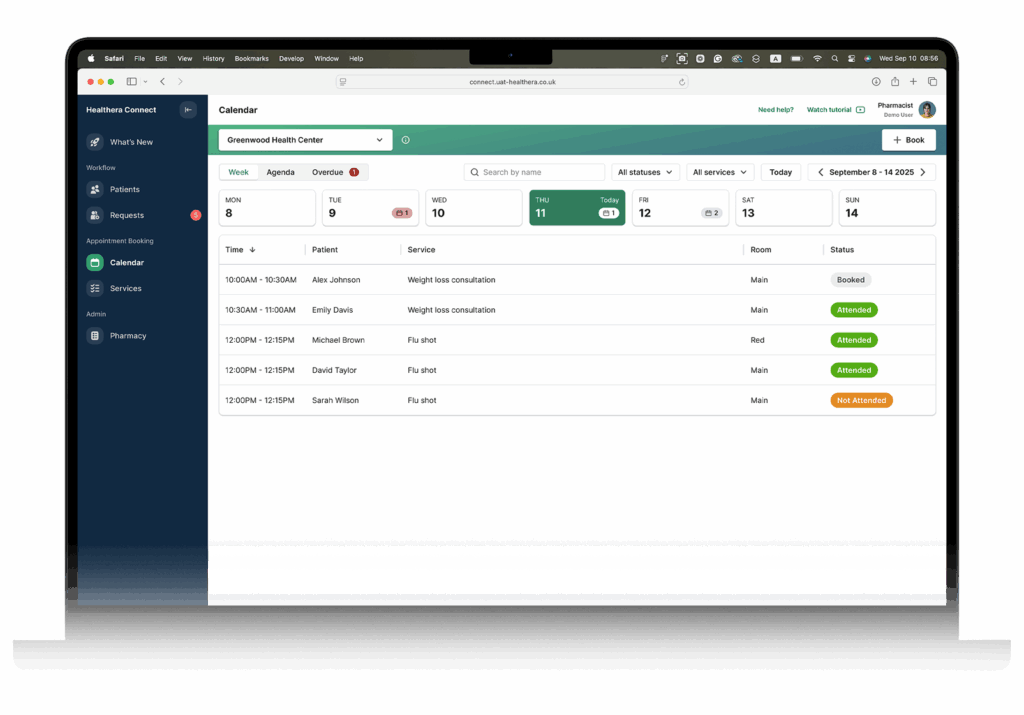
Pharmacies across Canada are under increasing operational pressure because clinical services, higher patient expectations, and constant interruptions are stretching teams thin. In response, many pharmacies have adopted new digital tools, hoping each one would solve a specific problem. But instead of simplifying operations, this approach often creates something even harder to manage: complexity.
The reality is that most pharmacies don’t need more technology. They need fewer systems that work better together.
This is where a workflow reset becomes essential.
Workflow Complexity Is the Real Bottleneck
When daily work is spread across phone calls, inboxes, websites, booking tools, and paper notes, even simple tasks take longer than they should. The result is constant interruption, reduced focus, and a workflow that feels reactive rather than controlled.
Over time, this complexity becomes the real bottleneck. It limits how efficiently prescriptions are processed, how easily services are delivered, and how effectively teams communicate with patients. Even strong, experienced pharmacy teams can struggle when the tools around them are fragmented.
A workflow reset doesn’t mean changing how you practice pharmacy. It means rethinking how digital tasks are organized and connected.
The Most Fragmented Areas in Pharmacy Operations
While fragmentation can exist anywhere, there are three areas where it causes the most friction in daily pharmacy life.
Patient communication is often scattered across phone calls, voicemail, email, and in-person conversations. Without a central place to manage messages, it’s easy for follow-ups to be delayed or missed entirely.
Bookings and scheduling are another major pain point. When appointments are booked manually or through disconnected systems, staff spend valuable time coordinating schedules, managing reminders, and responding to changes.
Refill requests frequently arrive through multiple channels, including phone calls, faxes, and in-person visits. Each request requires manual handling, which increases workload and introduces opportunities for error or delay.
Individually, these challenges are manageable. Together, they create a constant drain on time and attention.
Why Centralizing These Workflows Comes First
Centralizing communication, bookings, and refills creates immediate clarity, and when these interactions flow into a single system, teams gain a shared view of what needs to be done and when. Requests are no longer hidden in separate inboxes or lost between phone calls. Instead, wverything is visible, trackable, and easier to prioritize.
Moreover, centralization changes patient behaviour. When patients can request refills, book services, and receive updates digitally, they rely less on calling the pharmacy, leading to reduced interruptions and staff having much more control over their day.
Most importantly, centralization creates consistency. Messages trigger confirmations. Bookings trigger reminders. Refills trigger updates. Nothing needs to be chased manually, and nothing falls through the cracks.
Early Wins Pharmacies Notice Within Weeks
Pharmacies that centralize these core workflows often see improvements quickly:
- Phone volume begins to drop as patients adopt digital options.
- Staff spend less time reacting to interruptions and more time completing tasks efficiently.
- Appointment schedules become clearer, and service uptake improves.
Perhaps most noticeably, teams report that their day feels more manageable. With fewer systems to juggle and fewer surprises, workflows become calmer and more predictable. That sense of control has a direct impact on staff morale and patient experience.
A workflow reset doesn’t require a complete overhaul, it just requires attention to deliver meaningful results. By focusing first on the most fragmented areas and bringing them into one connected system, pharmacies can achieve meaningful operational improvements without disrupting existing dispensing processes.
A Smarter Way Forward
Centralization isn’t about adding technology for the sake of it. It’s about creating a foundation where digital tools work together to support pharmacy teams, not slow them down.
Pharmacies that embrace this approach are better positioned to deliver care efficiently, scale services sustainably, and meet patient expectations without increasing administrative burden.
Curious what centralization could look like in your pharmacy?
Explore how Healthera simplifies daily workflows and helps teams regain control of their day. You can read about our patient app, or even dig a bit deeper into Healthera Connect, your centralized dashboard that brings everything together.